News for all
The President discussed with investors issues of accelerating reforms in the fuel and energy sector
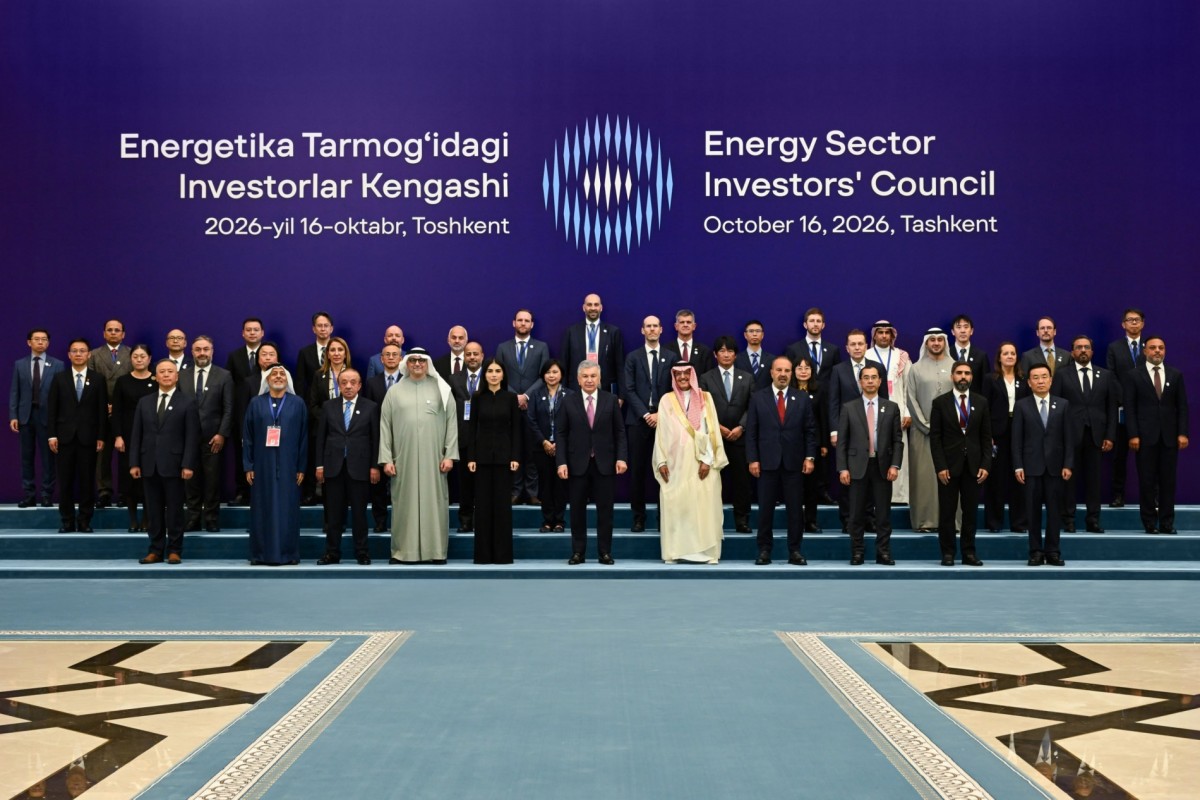
President Shavkat Mirziyoyev held an open dialogue with investors on accelerating reforms in the fuel and energy sector and increasing the sector’s investment attractiveness.
The head of our state emphasized that stable energy supply is important for economic development, the implementation of entrepreneurs’ plans, and improving the well-being of the population. Over the past ten years, the energy market has opened up to private investment, and public-private partnership mechanisms have been introduced. During this period, $35 billion in investment has been attracted to the sector. Thanks to the development of solar, wind, and hydropower, the share of renewable energy sources in total generation has reached 31 percent.
On the day of the meeting, agreements were signed on six major projects with a total value of $4.7 billion. They provide for the creation of 3,000 megawatts of generating capacity and 400 megawatts of storage capacity.
The President of our country noted that a new stage is beginning in attracting investment to the energy sector. Now each project must not only create new capacity, but also improve the reliability of energy supply and reduce electricity losses. By 2030, it is planned to create 22,000 megawatts of new capacity, increase annual electricity generation to more than 129 billion kilowatt-hours, and raise the share of renewable energy sources to 54 percent.
To this end, the systems of generation, transmission, and energy storage will be developed in an interconnected manner. After preliminarily determining what energy capacities are needed in a particular region, ready-made projects will be put up for open tenders. Investors will be informed in advance about the terms of land allocation, grid connection, and electricity purchase. In the near future, projects for six solar and wind power plants with a total capacity of 2,200 megawatts will be put up for tender.
For the first time, a National Master Plan for Energy Development until 2050 will be developed. By March 1 of next year, a grid connection opportunities map will be presented, and by July 1, a full master plan. This will allow investors to plan their projects in the long term.
Special attention was given to expanding power grids and energy storage infrastructure. By 2030, it is planned to build 5,000 kilometers of grids and 16 major substations, as well as increase energy storage capacity to 4.5 gigawatts. The need to ensure reliable electricity supply to industrial enterprises and data centers in advance, taking into account their growing needs, was also emphasized.
Issues of expanding private sector participation in distribution networks, modernizing social facilities and pumping stations based on energy-saving technologies were also considered. Mechanisms will be introduced that will allow producers of green energy to receive additional income from the sale of certificates and carbon credits.
The President emphasized that investment projects should also open up new opportunities for domestic industry. Twelve promising projects worth a total of $850 million have been prepared, providing for the localization of the production of high-voltage equipment, energy storage systems, and components for wind turbines. It is planned to create a special industrial zone where products necessary for the construction of a nuclear power plant in the Farish district will be manufactured.
In the oil and gas sector, cooperation will be expanded in geological exploration, improving the efficiency of field development, and deep processing of raw materials. In Ustyurt, joint exploration work is being carried out with SOCAR and British Petroleum on six investment blocks, and another 128 blocks have been prepared to be offered to foreign partners. Plans were also announced for the implementation of the MTO project in the Bukhara region and the modernization of the Bukhara and Fergana oil refineries.
Addressing the issue of the gradual introduction of market mechanisms into the liquefied gas supply system, the President emphasized that uninterrupted supply, safety, and quality of service to the population must be a priority.
It was proposed to expand investors’ participation in training specialists for new energy facilities. Starting next academic year, admission quotas in energy-related fields will be increased, and state grants will be allocated for the annual education of 50 young people at leading foreign universities.
Investors put forward an initiative to address issues related to land allocation, grid connection, and obtaining technical conditions within the framework of a permanent dialogue. In this regard, a Council of Investors in the Fuel and Energy Sector will be established. The Council, chaired by the Head of the Presidential Administration, will deal with the prompt resolution of issues arising at all stages, from project preparation to commissioning of facilities.
At the end of the event, the head of our state spoke with investors, listened to their opinions and proposals, and expressed readiness to continue mutually beneficial partnership.
Source
